Loading…
Blog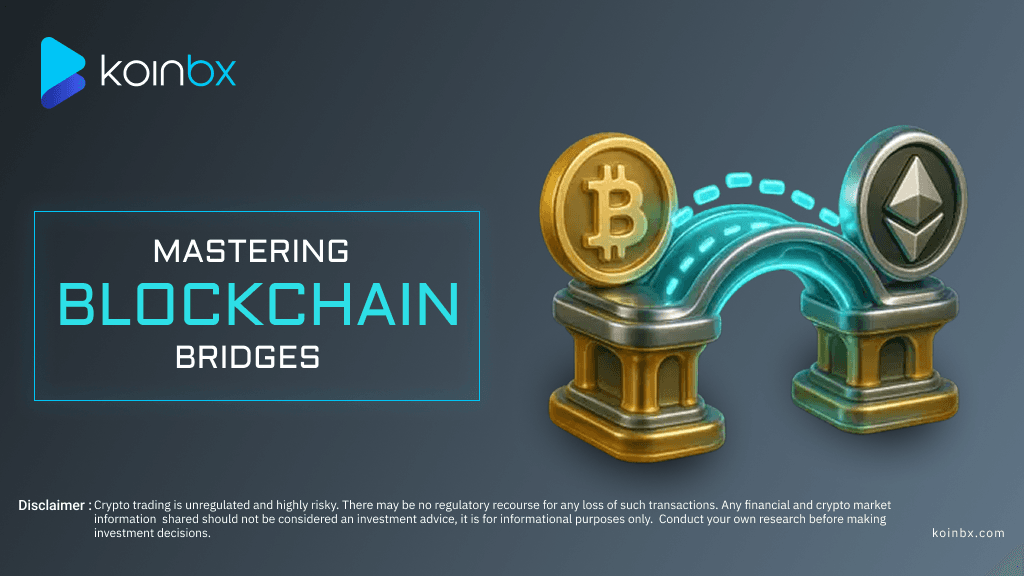
Blockchain Bridges Explained: A Complete Guide
02/09/2025, 07:55:34 am
Article Content
The blockchain world has evolved into a complex web of platforms, each with its own set of rules and systems, rather than a single large network. Understanding blockchain bridges has become essential for investors. In this quickly changing digital economy, these bridges are crucial for data and asset transfers between blockchains. Not using them is likely causing you to lose out on significant chances for development and diversity.
What Are Blockchain Bridges?
Blockchain allows the users to transfer their assets, tokens, and user data with the previously linked blockchain. This is regarded as the most important aspect in the world of digital assets. Transferring coins is only one aspect of this; another is enabling platform-wide flexibility and efficiency.
The usefulness and accessibility of your assets are restricted since each blockchain remains a separate environment without these bridges. An important element among digital assets is this blockchain bridges.
How Do Blockchain Bridges Work?
Lock and Mint Mechanism
In return for locking your tokens on the original network, you get a matching number of wrapped tokens on the target chain. When you’re ready to move back, you burn those wrapped tokens, and the system releases your original assets. Actually, it is a simple procedure that is safe, effective, and designed to uphold the law.
Validator Networks
The validator, who are known as relayers, are responsible for verifying transactions and ensure asset transfers go through accurately. To keep things above board, these validators actually stake their own assets as collateral. If they act dishonestly, they risk losing their stake—so there’s a pretty strong incentive for them to play by the rules.
Smart Contract Integration
Advanced smart contracts automatically handle asset locking, minting, burning, and unlocking in accordance with preset rules and security parameters, managing the entire bridging process.
Types of Blockchain Bridges
Trusted Bridges
Cross-chain transfers are facilitated by the federations or centralized organizations on which these bridges are dependent. Although they frequently offer better user experiences and quicker transactions, users must still entrust their assets to the bridge operators.
Trustless Bridges
You need not rely on centralized exchanges, and their shortcomings are included with user interactions, decentralized security, and higher transaction costs.
Bidirectional vs. Unidirectional Bridges
Users can move assets between networks using bidirectional bridges, while single-directional bridges only allow one-way transfers.
Also Read: What Is Blockchain and How Does It Work?
Popular Use Cases in India and Globally
DeFi Yield Farming
Across various blockchain networks, crypto enthusiasts can access high-yield farming opportunities by using bridges. DeFi users in India have the option to transfer assets to networks that offer reduced transaction fees or higher returns.
NFT Trading
The use of bridges to move digital assets between different blockchain platforms and marketplaces gives NFT collectors access to a greater variety of trading opportunities and diverse communities.
Gaming and Metaverse
The players who use blockchain network bridges move the tokens and their gaming assets across different gaming ecosystems and get profit from their gaming investments.
Arbitrage Opportunities
Professional traders use these bridges and leverage the price between the same assets across different blockchain networks and earn profit from arbitrage.
Benefits of Using Blockchain Bridges
Enhanced Liquidity
Bridges increase the scope of market liquidity and connect the separate blockchains that build a larger and effective digital asset.
Cost Optimization
DeFi participants and regular traders can drastically cut costs by moving assets to networks with lower transaction fees.
Risk Distribution
This spreading of the assets benefits the users, safeguarding their assets from any attacks or risks, technical issues, market volatility, and regulatory changes.
Risks and Security Considerations
Smart Contract Vulnerabilities
Bridge smart contracts are complex systems that may be prone to errors. In several well-known bridge hacks, users have lost a lot of money.
Centralization Risks
Asset accessibility may suffer if the centralization points brought about by trusted bridges are jeopardized or come under regulatory pressure.
Technical Complexity
When using bridges, network addresses, transaction parameters, and timing all need to be carefully considered, increasing the risk of asset loss due to user error.
Regulatory Uncertainty
The long-term sustainability of cross-chain bridges may be threatened by the numerous countries, including India, that still have ambiguous laws governing them.
Best Practices for Safe Bridge Usage
Start with Small Amounts
Test bridge functionality with small amounts before executing larger transfers to become familiar with the procedure and spot any possible problems.
Verify Network Details
Verify transaction parameters, network choices, and destination addresses one last time to prevent sending assets to the wrong networks or addresses.
Stay Informed
Observe community debates, security alerts, and updates to the bridge protocol to remain informed about potential problems or enhancements.
The Future of Blockchain Bridges
Here’s how it’s shaping up: as the multi-chain world keeps growing, blockchain bridges are set to get a whole lot more advanced—think smarter security, smoother interfaces, and tech like zero-knowledge proofs tightening up privacy. Crossing assets between chains? Honestly, it’s becoming less of a headache.
For Indian crypto users and global investors alike, getting a solid grasp on how these bridges work isn’t optional anymore—it’s absolutely key if you want to maximize what DeFi has to offer. Ignore it and, well, you’ll miss out.
Download KoinBX Android App | Download KoinBX iOS App
Disclaimer: Any financial and crypto market information shared should not be considered investment advice. It is for informational purposes only. Conduct your own research before making investment decisions. Crypto trading is unregulated and highly risky. There may be no regulatory recourse for any loss of such transactions.
Share Post
Share this article with your friends and community!