Loading…
Blog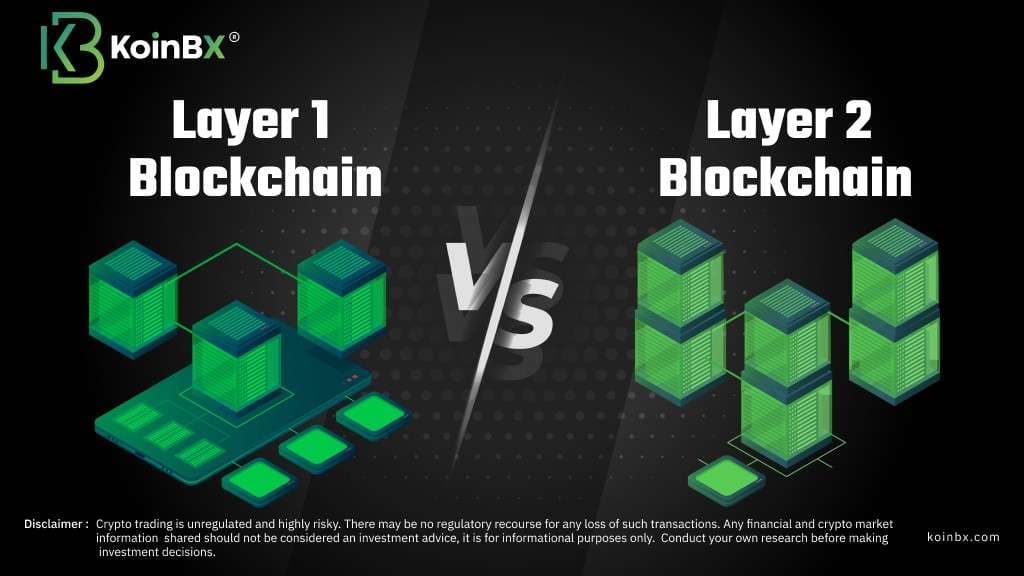
Layer 1 vs Layer 2 in Blockchain: Understanding the Differences
05/03/2025, 06:43:23 am
Article Content
Blockchain, the backbone of crypto assets, has evolved significantly since its inception. A key aspect of this evolution is the development of Layer 1 and Layer 2 solutions. Understanding these layers and their differences is crucial for anyone involved in the crypto space, from developers to investors. This article goes into the nitty-gritty of Layer 1 and Layer 2 blockchains, pointing out their main points, some examples, and what makes them different from each other.
In the blockchain world, being able to handle a lot of transactions quickly and cheaply is super important. As blockchain networks get bigger, they need to be able to process more transactions fast and affordably. This is when we need Layer 1 and Layer 2 solutions. They both work to make blockchain work better but use different methods. Let's take a look at what each layer is all about and how they add to the blockchain world.
What is layer 1 blockchains?
Layer 1 blockchains, also known as the base layer or the main chain, refer to the underlying architecture of the blockchain network. This layer is responsible for the core functions such as consensus mechanisms, transaction processing, and data storage. Enhancements and upgrades at this level involve changes to the protocol itself.
Also Read: What are block rewards?
Key Features of Layer 1 Blockchains
1. Consensus Mechanisms: Layer 1 blockchains rely on consensus algorithms like Proof of Work (PoW) or Proof of Stake (PoS) to validate transactions and secure the network.
2. Decentralization: These blockchains aim to be highly decentralized, ensuring that no single entity has control over the network.
3. Security: As the foundational layer, security is a primary focus, ensuring the integrity and immutability of transactions.
4. Scalability Challenges: Traditional Layer 1 blockchains often face scalability issues, as increasing the number of transactions per second (TPS) can be challenging without compromising security or decentralization.
5. Smart Contracts: Many fundamental blockchain systems support the execution of smart contracts. These contracts are designed to automatically enforce their terms, with the conditions of the agreement encoded directly into the software. Smart contracts enable the automation of transactions, reducing the reliance on intermediaries and enhancing transparency.
Also Read: What is Cross-Chain Interoperability?
Examples of Layer 1 Blockchains
-
Bitcoin - The first and most well-known blockchain, Bitcoin uses PoW for consensus and is highly secure but faces scalability issues. Crypto asset: BTC
-
Ethereum - Ethereum also originally used PoW but is transitioning to PoS with Ethereum 2.0 to improve scalability and reduce energy consumption. Crypto asset: ETH
-
Binance Smart Chain - A high-performance Layer 1 blockchain that uses a PoS-based consensus mechanism called Proof of Staked Authority (PoSA). Crypto asset: BNB
What is Layer 2 Blockchain?
Layer 2 blockchains are secondary frameworks or protocols built on top of Layer 1 blockchains. Their primary purpose is to enhance the scalability and efficiency of the underlying blockchain by offloading some of the transaction processing from the main chain.
Key features of Layer 2 blockchain
1. Scalability Solutions: Layer 2 solutions aim to increase transaction throughput and reduce latency, making the blockchain more scalable.
2. Off-chain Processing: Transactions are processed off-chain and then batched or settled on the main chain, reducing congestion and fees.
3. Interoperability: Many Layer 2 solutions are designed to be compatible with multiple Layer 1 blockchains, enhancing their utility and reach.
4. Enhanced User Experience: By reducing transaction times and fees, Layer 2 solutions offer a more user-friendly experience.
Examples of Layer 2 Blockchains
-
Lightning Network: A Layer 2 solution for Bitcoin that enables fast, low-cost transactions by creating off-chain payment channels.
-
Polygon: A popular Layer 2 scaling solution for Ethereum, providing faster and cheaper transactions through its sidechain architecture.
-
Optimism: An Ethereum Layer 2 solution that uses optimistic rollups to increase transaction throughput and reduce fees.
Also Read: What is Blockchain Oracle?
Key Differences Between Layer 1 and Layer 2
|
Key Differences |
Layer 1 Blockchains |
Layer 2 Blockchains |
|---|---|---|
|
Architecture |
Form the base of the blockchain network, handling all transactions and data storage. |
Built on top of Layer 1 blockchains to enhance their performance. |
|
Scalability |
Often face scalability issues as the network grows. |
Address scalability by offloading transaction processing from the main chain, increasing throughput. |
|
Transaction Speed and Cost |
Can be slow and costly due to network congestion. |
Offer faster and cheaper transactions by processing them off-chain and settling on the main chain. |
|
Consensus Mechanisms |
Use consensus algorithms like Proof of Work (PoW) or Proof of Stake (PoS) to validate transactions. |
Rely on the security of the underlying Layer 1 blockchain; no separate consensus mechanisms for off-chain transactions. |
|
Security |
Focus on ensuring the integrity and immutability of transactions. |
Leverage the security of the Layer 1 blockchain while adding an additional layer of trust for off-chain transactions. |
Bottom Line
Layer 1 and Layer 2 blockchains are both integral to the advancement and adoption of blockchain technology. While Layer 1 provides the foundational security and decentralization, Layer 2 offers scalable and efficient solutions to meet the growing demands of the network. Understanding the differences between these layers, their key features, and examples is essential for anyone involved in the blockchain ecosystem. As technology continues to evolve, both layers will play crucial roles in shaping the future of decentralized networks and applications.
Download KoinBX Android App | Download KoinBX iOS App
Disclaimer: Any financial and crypto market information shared should not be considered investment advice. It is for informational purposes only. Conduct your own research before making investment decisions. Crypto trading is unregulated and highly risky. There may be no regulatory recourse for any loss of such transactions
Share Post
Share this article with your friends and community!